
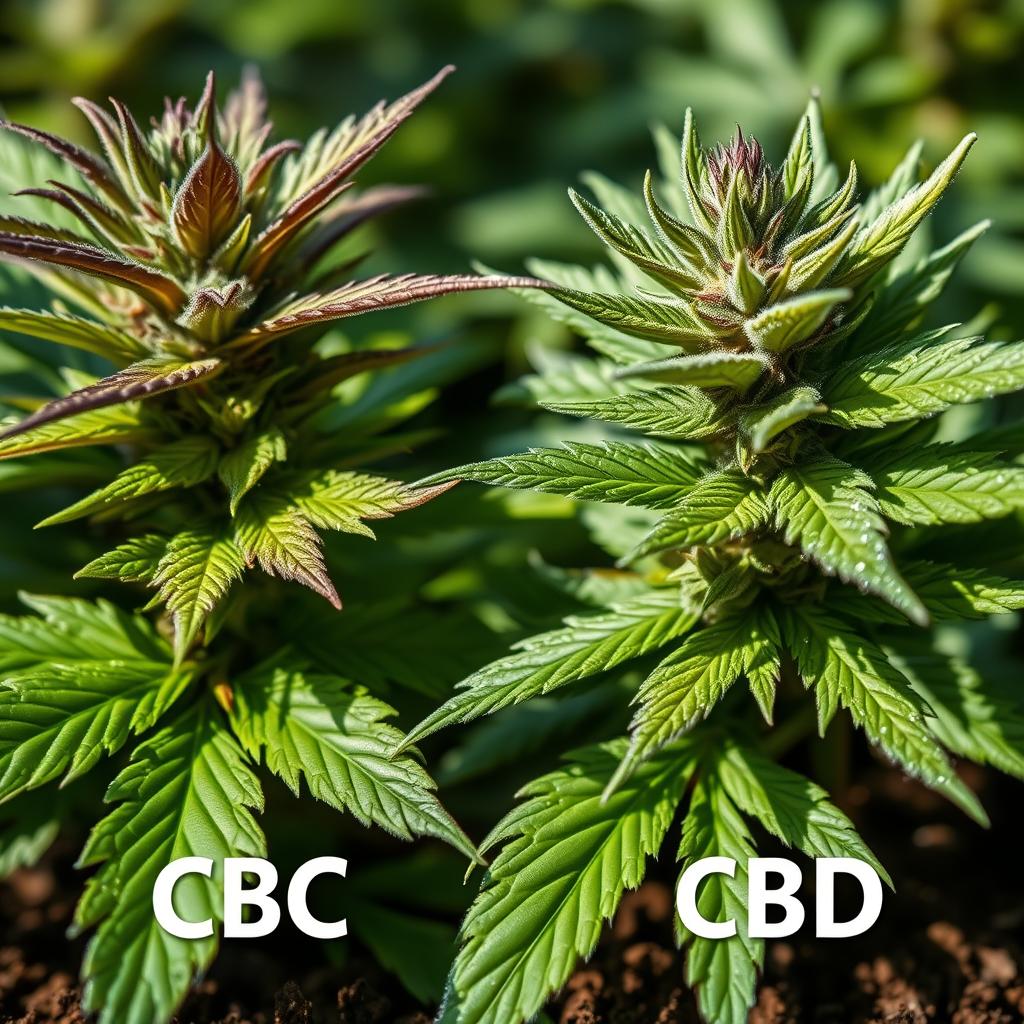
CBC vs CBD: Key Differences, Benefits, Uses, and Therapeutic Effects
The cannabis planet contains numerous bioactive compounds – over one hundred. These compounds are collectively called cannabinoids. Most know THC and its famous non-efficacy form called Cannabidiol (CBD). However, there are so many other cannabinoids that are still keeping a low profile and waiting to rise to fame. Among the most potential of such cannabinoids is Cannabichromene alias CBC. With more studies coming up, the dynamic is changing and so many people are now asking questions like what is that all about cbc vs cbd as well as what are the advantages and disadvantages of each compound.
Knowing these can help you in planning your wellness program. Although they originate from the same natural source, they exert differently, function in a distinct manner, and have different therapeutic uses. In this article, we shall look at the important differences thereby focusing on the cbc vs cbd debate, their benefits, and mechanisms of action in a human body.
What does CBD stand for? What is Cannabidiol?
The highest circulating and most publicized of all the non-psychotropic cannabinoids is, of course, cannabidiol (CBD). The last ten years has brought a huge rise in its use for numerous health reasons, but without the downside of getting intoxicated. It is mostly obtained from the plant known as hemp which is a cannabis plant that has been cultivated to contain the lowest concentration of THC of all the cannabis plants, less than 0.3% to be precise. Presently, both adults and even children can extend a hand for CBD and find it in form of oils, tinctures, lotions and even foods.
The popularity of CBD is not based on thin air. It is usually taken by individuals who experience natural distress, irritation and pain, or who are unable to sleep. Many factors, including its legality and widespread acceptance, have enhanced the treatment-seeking behavior of cannabis users and their number in general.
Definition of Cannabichromene or CBC
Cannabichromene or CBC is yet one of those non-psychotropic cannabinoids that, despite being numerous among the so-called “minor” cannabinoids, has still remained within the shadow of CBD. Just as CBD and THC come from cannabigerolic acid (CBGA), the “mother cannabinoid”, CBC also does. With the gradual development of the cannabis plant, CBGA proceeds to be transformed into the major cannabinoids such as the CBCA, which is an acidic form of the CBC.
CBC, though non-intoxicating, harbors interesting features that are drawing the interest of scientists. Research then conducted indicates that it has immense scope in the fields of brain care, pain practice and also skin therapy. The question in the cbc vs cbd discussion is not which is ‘better’ but, which one is appropriate and in what use.
A Detailed Analysis of CBC and CBD
To understand the cbc vs cbd, it is very important to examine the fundamental aspects of those two cannabinoids. Even though both cannabinoids are not drunk enabling intoxicants and are derived from the same plant, it makes sense to talk about their differences.
| Feature | Cannabidiol (CBD) | Cannabichromene (CBC) |
|---|---|---|
| Psychoactivity | No, non-intoxicating. | No, non-intoxicating. |
| Abundance in Hemp | High (often the most abundant cannabinoid). | Low (typically found in smaller concentrations). |
| Mechanism of Action | Interacts indirectly with the Endocannabinoid System (ECS), primarily by preventing the breakdown of our natural endocannabinoids. | Binds poorly with CB1/CB2 receptor subtypes, but strongly binds to type TRPV1 patented receptor methods used for pain uncontrolled distribution of the molecules in the cellular space. |
| Key Potential Benefits | Anxiety, pain, inflammation, seizures, sleep. | Brain health (neurogenesis), inflammation, pain, depression, acne. |
| Legal Status (USA) | If it contains less than 0.3% THC and is, therefore, from hemp – federally legal. | If it contains less than 0.3% THC and is, therefore, from hemp – federally legal. |
How They Function
The fundamental aspect of the “cbc vs cbd” comparison concerns the way each affects the human body. It is not possible to explain this without first introducing the concept of the Endocannabinoid System (ECS). This system can be characterized as a core body balance stabilizing mechanism that has an effect upon such functions as emotions, hunger, pain, immune reactions among others.
CBD In a Roundabout Way
Fascinatingly, the CBD receptor affinity for CB1 and CB2 cannabinoid receptors is very low. Unusual for most stimuli, there is a way to stimulate this indirect receptor instead of direct stimuli. Its main function in the body is to inhibit the FAAH enzyme. An enzyme that breaks down anandamide.
It is well known as the paracetamol molecule, anandamide is hitherto an endocannabinoid produced in the human body. Because it blocks the enzyme that eliminates it, therefore, there is an increase in the concentration of how much anandamide is present in the individual’s several bodily systems and hence, these systems can perform their peace-inducing and joy-elevating functions for a longer period of time. Such a help in performing a function in a relative way is a characteristic of how CBD operates.
Pathology of CBC
CB1 and CB2 receptors do not seem to recognize CBC very well either. CBC does however possess a therapeutic ability due to its action on another group of receptors in the human body. CBC is an excellent activator for vanilloid receptor TRPV1 and TRPA1 angiotensin 1 receptor.
The importance of these receptors lies in the fact that they signal pain and inflammation to the rest of the body. Given that they play such a role, it is plausible that CBC can adjust pain perception at the origin by acting just on these unlikely pathways. The interaction with other pathways taken by cbc vs cbd makes it very interesting ie contributes to the excitement about its possible cure in different forms.
Significant clinical uses – cbc benefits and cbd benefits, make for a good debate.
On the one hand, both cannabinoids possess enormous potential those beneficial effects, on the other hand, it is necessary to understand these differences and the limitations that result from it: in respect of different activities or tasks. The examination of the comparison of cbc vs cbd has been shedding light on which of the two might be more helpful to specific diseases.
Pain and Inflammation
This particular point represents a huge point of contention in the cbc vs cbd comparison. One of the very well-known uses of CBD is its use for inflammation and pain management. It does so through inhibition of inflammatory processes and also initiation of pain modulatory mechanisms such as the serotonin pathway.
However, CBC adopts a structural approach. It activates TRPV1 and TRPA1 receptors thereby in a way blocking the pain pathways directed to the brain. There is evidence that CBC may help reduce pain that primarily arises from inflammation. Moreover, the combination of these two cannabinoids also appears to enhance their individual therapeutic effects.
With regard to Mental Wellness
When discussing the consideration of brain health, CBC has some significant and divergent advantage: aids in neurogenesis. One of the options involves a study that became available in 2013, wherein it has been established that CBC worked in favor of survival of neural stem progenitor cells (NSPCs). Cells that reach a specialization of different types of neuron, for instance, active hippocampal neurogenesis, cannot develop and survive without such cells. This allows for CBC to be placed in a unique class of substances that can help with the brain functions.
CBD on the other hand does not play a role in neurogenesis per se but it does help in modulating mood to a great level. Its action on serotonin receptors makes it an invaluable compound especially for people who suffer from anxiety. In a cbc vs cbd for mental health debate, one might find that the issue can be simplified into: CBD is helpful in controlling anxiety, while CBC offers the potential as an anti-depressant at least early on.
For Preventing Acne
The cbc vs cbd debate also applies to dermatology where these two compounds may be beneficial in distinct ways. CBD is known to be a good ingredient in most skin care applications due to its addition to inflammation and general antioxidation, in this manner it calms annoying skin.
In any case, CBC may be an even more versatile combatant as regards acne. According to studies done in 2016, CBC sounded as promising regarding the various causes of acne. This was seen in the reduced and/or inhibited production of sebum (that fatty substance which contributes to clogged pores) and prevented cells that produce sebum fat from being made and had a strong anti-inflammatory effect on sebaceous glands. Acne, thus, makes the CBC cannabinoid nutrition extremely attractive.
The Encircling Coalition – Is it Always Considered to Enhance Each Other?
One essential point to remember regarding the comparison between cbc vs cbd is that making a choice may not be necessary. According to the so-called ‘entourage effect’ hypothesis, cannabinoids and other compounds in the cannabis plant, such as terpenes, perform optimally when in combination, rather than when used separately. In such cases, those individual chemicals act in a manner that synergistically enhances each other’s effects.
For instance, the pain-relieving effect of CBC can be enhanced by the anti-inflammatory properties of CBD. Synergy can be achieved with a product that uses multiple and diverse cannabinoids in the composition such as a full spectrum or broad spectrum oil. Therefore, the issue of cbc vs cbd may not necessarily concern the incompatibility of these two substances.
Legality and Availability:
In 2018, the Farm Bill was enacted in the United States which legalized federally all cannabinoids sourced from hemp, provided that the tetrahydrocannabinol content does not exceed 0.3% by its dry weight. In other words, CBD and CBC are valid in the country but the legality of each state does not follow any other scale completely.
The most important distinction between cbc vs cbd is the aspect of access. Unlike CBD which is abundant and readily available, CBC is rare and hardly available. Because it is only present in the plant in very small amounts and therefore difficult to extract a pure form. CBC is most often found within full spectrum CBD oil or in special tinctures designed to be rich in minor cannabinoids instead.
Provoked Side Effects: CBC and CBD
CBD and CBC are considered safe and well tolerated in general and neither causes any kind of intoxication. A vast amount of research and popularity of CBD makes its side effects well known. They are usually mild and might include, but are not limited to the following:
- Tiredness or sleepiness
- Loose stools
- Increase or decrease of hunger or body mass
Less is known when it comes to the side effects of CBC due to the fact that there is too little research on the effects of the compound in humans. Yet, available studies do not show any significant side effects. Like any substance, it is good to start slowly and consult a doctor if one is taking any other medicines.
FAQ (Frequently Asked Question)
Am I going to get high from CBC, and or CBD?
Nah. Not CBC. Nor CBD. None of them actually. As is known, Cannabis gets one high. That is because of THC (tetrahydrocannabinol) cannabinoid. Both CBC and CBD are void of intoxicating effects and do not hinder one’s ability to think.
For dealing with anxiety, which one works better, CBC or CBD?
When thinking about cbc vs cbd, side by side, for anxiety, CBD takes over without a shadow of a doubt. It’s by far the most well-documented, its interactions with serotonin and endocannabinoid systems included and therefore, its use is standard practice in anxiety treatment. In contrast, though CBC has displayed some antidepressant effects; its use as an anti-anxiety agent needs more studies.
Is it ok to mix CBC with CBD?
Indeed it is, and it is generally encouraged too. In fact, when combined, they provide the so-called entourage effect of the cannabinoids: enhancing each other’s positive effects. There is also more or less a natural amount of both CBD and CBC in the majority of full spectrum formulations.
What is the reason for increased difficulties in finding CBC as compared to CBD?
The key issue is supply. Hemp plants can be developed to have high levels of CBD content; some contain up to 20% of CBD by weight. In contrast, CBC is found in very low amounts, often less than 1%. Because of such low levels, extracting larger quantities of CBC becomes difficult and expensive, and so, there are not many CBC based concentrates available.
Conclusion
It doesn’t make sense for there to be winners and losers in the cbc vs cbd arguments. What matters is recognizing that these compounds might be used apparatus in the health care system but in very specific ways. CBD will not be left out – a colonialist war cannot be waged without soldiers. It is a popular compound well known and used for anxiety, insomnia, systemic inflammation and overall wellness in dealing with general issues. This is a subtle and non-aggressive action that encourages any cannabinoid user for a long time.
CBD, a market’s aspirant nowadays, presents a different slant. Its specific behavior towards particular pain receptors, a cocktail of benefits like supporting brain functions, and acne-fighting properties are some of the reasons why one can be considered a rather specialized product. So far, there is a need for comprehensive studies before any conclusions can be made — but promising data are already available. This is to say that cannabinoid health is not about cbc vs cbd, but intelligently employing both in their best configuration so as to make full use of what the cannabis herb offers.
