
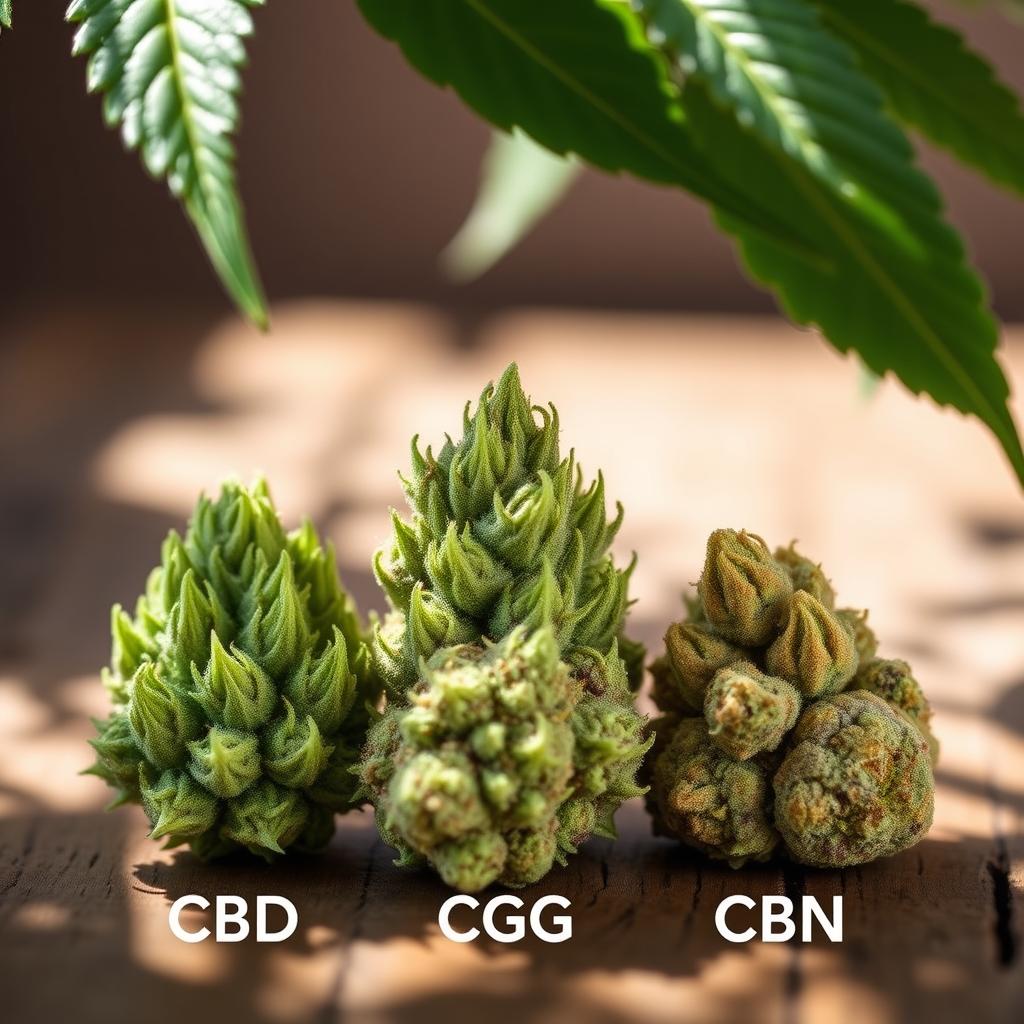
Understanding CBD, CBG, and CBN: Uses, Effects, and Benefits
Hemp Originated Products
Hemp originated products are not limited to only one compound named CBD and have gone further. As people open up to the idea, they come across a plethora of other chemicals called cannabinoids, which seem to possess distinct functions themselves. Two notably emerging substances getting a lot of buzz are CBG and CBN. Inevitably, crashing to this junction makes anyone who wants to get the optimal use of their wellness regime ask: what is the difference between CBD vs CBG vs CBN? Of course, it is imperative to know the characteristics of all three when looking for a specific effect. The key point here is that all three of these cannabinoids are found in one plant, but that does not mean that one is a substitute for the other. They have different origins, and they interact with our body in very distinct manners. They are also associated with very different physiological effects. In this section, the focus will be on breaking down each of them with respect to theory and practical context, analyzing them in a way that will aid in understanding where each one of them fits into the CBD vs CBG vs CBN misconception.
What Are Cannabinoids? Here’s a Brief Overview
To understand differences, firstly we need to know what cannabinoids are. Cannabinoids are biochemical elements that are characterized in the Cannabis Sativa plant. There are less than two hundred different cannabinoids mentioned, over which one can state their structures and effects with significant differences. Every such chemical doesn’t just sit around waiting for something to happen, but rather it performs a certain function within the body. Every organism possesses an endogenous cannabinoid system (ECS), which is one of the most important and sophisticated cell signaling systems, going well beyond mediating biological processes such as sleep and emotion but also extending to appetite, memory, inflammation regression, etc. The ECS works to ensure that all systems within the body are in an optimal state of balance, or otherwise known as stasis. Two kinds of cannabinoid receptors exist within the ECS: CB1 receptors, which are found mainly within the central nervous system, and CB2 receptors, which are found specific to one’s body, such as muscles and nerves in addition to immune cells. This differential interaction with different cannabinoid receptors is the basis for the large variation in the effects of cannabinoids.
Insight Into Cannabidiol (CBD)
CBD Definition
Cannabidiol, also known as CBD, is the “runner-up” of the number of cannabinoids, with THC (abbreviated as tetrahydrocannabinol) being the most prevalent in cannabis and the former being the second most frequently found. Contrary to THC, CBD is absolutely non-psychoactive, thus will not result in the euphoric “high” feeling that one experiences when consuming marijuana. Towards the three classes of cannabinoids that we are going to talk about, this one is the most predominant and, consequently, the most accessible; hence it is the first step for many individuals.
Mechanism of Action of CBD
It fascinates the fact that CBD does not have a strong affinity for either CB1 or CB2 receptors. Let me explain… It is considered to exert its effect mostly in an indirect manner. Researchers have determined that CBD may inhibit the breakdown of endocannabinoids, which are cannabinoids produced by one’s own body in order to enhance these compounds’ action on the ECS. It can also co-bind with different receptors, which could also be serotonin receptors, helping to calm explains.
Traditional Applications and Other Advantages of CBD
Thanks to persistent research and other factors, CBD is associated with various health benefits. It’s now used by many individuals who seek overall wellness. Some typical applications of CBD include:
- Relieving Stress and Anxiety: It has a calming effect upon consumption, which is one of the main reasons people take CBD, to help alleviate everyday stress.
- Relieving Pain and Inflammation: Research indicates that CBD possesses anti-inflammatory effects, which can be useful in alleviating pain among arthritis patients.
- Better Sleep: CBD possesses relaxation effects. It can help alleviate pain management anxieties that may cause sleeping disturbances.
- Seizures: Epidiolex is the only FDA-approved drug that contains CBD and is used in treating some forms of epilepsy that are not common with ordinary people.
Understanding CBG (Cannabigerol): The Mother Cannabinoid
Define CBG
Cannabigerol (CBG) has been popularly referred to as the “mother of all cannabinoids” or the “stem cell” cannabinoid. This is the case because most other cannabinoids like CBD and THC – despite belonging to the large family of cannabinoids – all come from Cannabigerolic Acid (CBGA), which is the acidic form of CBG. In the course of the growth of the hemp to maturity, CBGA is converted by enzymes into the other cannabinoids. This means that in most cases, mature plants will have very low CBG concentrations, often less than 1%, making it a minor cannabinoid, and hence expensive to produce.
Mechanism of Action of CBG
One major difference regarding CBD, CBG, and CBN is the manner in which CBG interacts with the ECS. CBG, unlike CBD, is known or is believed to bind directly to both CB1 and CB2 receptors. This advantage has its limits but draws on possible aesthetic impacts of the body organs, more executive CBG role in the systems under the ECS. This is a critical part of what one has to grasp regarding the functionality of these cannabinoids, in so far as CBG is concerned.
Uses of CBG and Possible Advantages to Users
The current research on the effects of CBG is insufficient compared to that of CBD; however, it has been shown in the initial investigations that its use is interesting and offers some relevant advantages, which make it unique:
- Anti-inflammatory activity: Studies show CBG could be strongly anti-inflammatory, with its use being looked into specifically in conditions such as Inflammatory Bowel Disease (IBD).
- Antibacterial Effect: An experiment conducted in 2020 demonstrated that CBG exhibits strong antibacterial activities, especially against drug-resistant bacteria such as MRSA.
- Neuroprotection: In certain experiments using animals, it has been concluded that a particular compound, which is CBG in this case, can aid in the repair of damaged nerve cells. Therefore, its progress in the treatment of certain neurodegenerative diseases is being investigated.
- Appetite enhancing properties: CBG has been shown to encourage feeding in rats, which could prove useful for people who have lost their appetite.
CBN, the Cannabinol that Puts You to Sleep
The What of CBN is Explained
The minor cannabinoid, Cannabinol or CBN, is another intriguing cannabinoid, and its explanation is quite exceptional. This is because the cannabis plant does not have CBN in its raw form. CBN can be obtained from THC when the psychoactive compound is oxidized and heated over a period of time. That’s why older cannabis flowers are rich in CBN. While it is a THC-derived compound, it exhibits little psychoactivity, as the closest estimate would be that its psychoactivity is about 25% of THC’s, and so the typical household dose level would not be associated with a high effect.
Role of CBN
The action of CBN takes place at the level of the CB1 receptor, but to a lesser extent than THC. Its most profound effect, which is sedation, is thought to arise from this mechanism of action. The argument concerning CBD vs CBG vs CBN with regard to insomnia treatment often revolves around CBN’s reputation.
Primary Applications and Uses of CBN
CBN is best known for one specific action, although there is ongoing investigation into additional uses of it:
- Calming Influence: CBN is well known as a substance to induce sleep. A number of consumers are able to overcome severe insomnia thanks to this compound.
- Enhancing Pain Tolerance Level: CBN and other cannabinoids like it have been indicated for their potential pain relief. This is because of their capability to alter the perception of discomfort in the target neurons.
- Anti-inflammatory: There is also some preliminary evidence that CBN is anti-inflammatory in nature and might be useful for diseases like arthritis.
Main Story: A CBD vs CBG vs CBN Talk
In order to get to the bottom of the CBD vs CBG vs CBN issue, one must not overlook the importance of side-by-side assessment. Each of these compounds has something to offer, and having their features side by side can help in overcoming a dilemma. In this table, we show the important features which focus on the CBD vs CBG vs CBN discussion.
| Headings | CBD | CBG | CBN |
|---|---|---|---|
| Primary Nicknames | The Very Versatile | The Primary Cannabinoid | The Drowsy Cannabinoid |
| Availability | Many industrial hemp species contain it. | Although it is the forerunner of (CBGA), various cannabinoids are considered low in mature plants. | It is a product of the catabolism of THC. It is present in old marijuana. |
| Relation to E.C.S. | It affects the function of ECS receptors in a roundabout way. | Has the capability of attaching proportionately to CB1 and CB2 receptors. | Makes a weak attachment to CB1. |
| Main Expected Benefit | Reducing stress and pain. | Relaxation and fighting depression. | Controlling inflammation. |
| Influence on Behavior | No | No | Quite slight and almost unnoticeable for normal dosages (without intoxication occurring). |
What is Best for Inducing Sleep?
If we take into consideration the CBD vs CBG vs CBN for sleep, it is no doubt that CBN is a winner. This is the only effect that the cannabinoid is praised for. However, CBD does work in aiding sleep, particularly if the insomnia is a by-product of anxiety or pain. For the lucky few, only a CBN and CBD blend solves the problem.
Which is Best for Pain and Inflammation?
The choice of CBD vs CBG vs CBN is rather blurred when it comes to pain because each of the compounds has its own advantage. CBD has been used for years as the main remedy for any kind of inflammatory pain. As CBG acts directly on the ECS receptors, there is a huge potential for such cannabinoids to be used in inflammatory conditions, especially of the gut. CBN can be an analgesic as well. Moderate pain is often effectively managed with a mixture of CBD and CBG during the daytime, by many users.
Which is Best for Anxiety?
In order to manage the symptoms of stress and anxiety, the best understood, and hence most recommended, currently is CBD. This is because of its ability to activate serotonin receptors. CBG and CBN are two cannabinoids that may not often be associated with anxiety, but CBD vs CBG vs CBN suggests that the effectiveness of each cannabinoid may differ from one human to another.
Opposing the Notion: Are Cannabinoids Useful?
There is no need for there to be a war of CBD vs CBG vs CBN. There are actually many experts who advise these cannabinoids to be used collectively. This process, known as the “entourage effect,” is the belief that cannabinoids concentrate stronger effects when used altogether than when used separately. The different compounds potentiate one another, ensuring more desirable aesthetics. This is the main reason why full-spectrum and broad-spectrum formulations with cannabinoids and terpenes are so common. In product taking synergy from all or from a combination of CBD, CBG, and CBN support can be provided during the day, such as anxiety and pain, or at night to induce a deep sleep. Comparing CBD vs CBG vs CBN stops being a competition of what to choose and turns into appreciation of all.
Are There Any Restrictions on Using CBD, CBG, or CBN?
With the Farm Bill of 2018, the United States allowed cultivation of hemp and sale of hemp products, which comprise Cannabidiol (CBD), CBG, and CBN since these products have less than 0.3% dry weight of Delta 9 THC. However, it must be noted that certain states in America impose their restrictions on such items. Each state can have its laws which outline the use of cannabinoid-related products. Before making a purchase or consuming any product containing hemp and its derivatives, it is advisable to look at the regulations in the locality first.
Questions and Answers (Q & A) About CBD vs CBG vs CBN
Do you have to use CBD, CBG, and CBN separately? Yes, you can take them together as well, and in fact, it should amplify the benefits due to what is known as the entourage effect. These ingredients are now made with various strengths because different goals or issues are addressed, for example, aiding in sleep or encouraging focus.
Do you think that when tested, CBG or CBN will appear in the sample? Maybe one will fail the drug test? It is quite understandable why people would ask such a question. Drug tests commonly look for THC, not CBD, CBG, or CBN. Still, some full-spectrum products include small proportions of THC (recommended at less than 0.3%) that, over time, can accumulate in the body and result in a ‘positive’ result. In this case, it is recommended to look for products that are ‘broad spectrum’ (without THC) or ‘isolate’ (only containing pure cannabinoid).
What is the difference between CBD vs CBG vs CBN, and which one is the best? While using the word “strongest” depends on what purpose one has in mind. In terms of sedation, CBN is ranked the highest. It has anti-inflammatory properties, with its direct role in ECS, CBG is considered very potent as well. However, cannabidiol is often the preferred form as it can give more readily excellent general control and more careful work in enhancing the well-being of an individual. The CBD vs CBG vs CBN debate is just a matter of the situation.
Is there a cause to worry about side effects? CBD, CBG, and CBN have a high degree of tolerance, with the most common side effects only being mild, if at all any. Such effects include sleepiness, dry mouth, appetite modulations, and diarrhea. Utmost caution should be taken when starting a new supplement regime; a patient/individual should always try a small amount and, most importantly, incorporate the advice of a medical practitioner prior to the commencement of a new supplement plan.
Final Thoughts
Increasingly, consumers of cannabinoid products are also branching out to groups of cannabinoids other than THC and CBD, and this inter-day tremendously broadens the market scope. In a CBD vs CBG vs CBN battle, there is no winner. Or, everyone wins because there are specialized therapies for different issues. CBD still is a jack of all trades in this sector; it is helpful in stress, mild analgesia, and maintenance of good health. CBG, on the other hand, is effective in combating inflammation and attention focusing without the sleepy effect and shows great promise. Along the same lines, CBN enjoys a solid reputation in combating sleep-related problems as it helps in promoting sleep and relaxation. This helps in making actual distinctions between the products and enables the user to consider picking the suitable product for the health and well-being of the individual.

Related Posts

Where Can You Buy Gold Spectrum CBD Safely Online?

How Much Does Harrelson’s Own CBD Cost in 2025?
